
10 Extinct Animals That Could Be Brought Back to Life
Introduction
What if we could bring back animals that went extinct hundreds or even thousands of years ago? Thanks to advances in genetic engineering, cloning, and DNA recovery, this science fiction dream is becoming increasingly possible.
"De-extinction"—the process of resurrecting extinct species—is no longer just a plot from Jurassic Park. Scientists around the world are actively working to bring back several species. Here are ten extinct animals that could walk the Earth again.
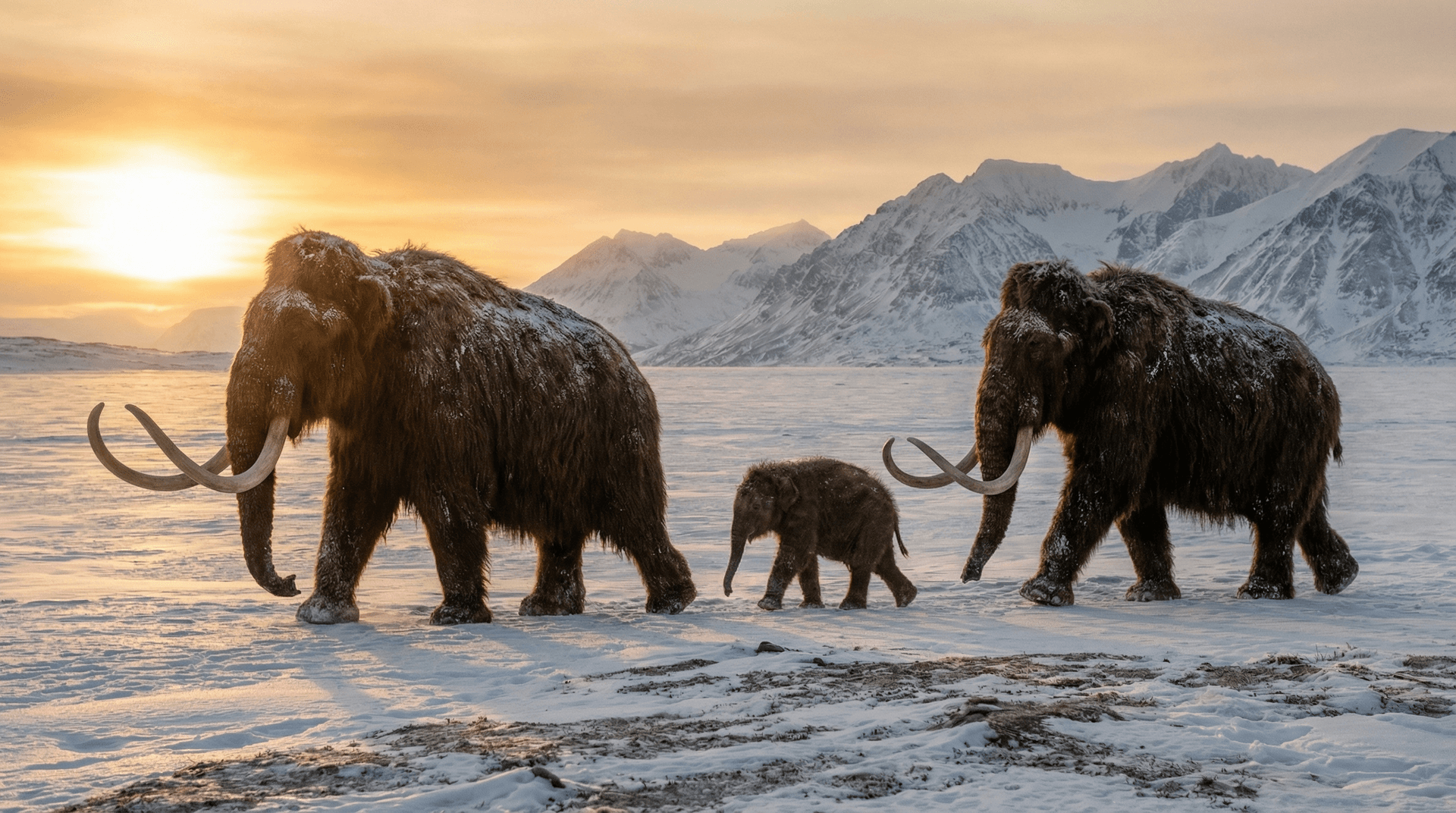
1. Woolly Mammoth
Extinct: ~4,000 years ago De-extinction Status: Active research by Colossal Biosciences
The woolly mammoth is the poster child of de-extinction. With well-preserved specimens found in Siberian permafrost, scientists have successfully sequenced much of the mammoth genome.
How it could work: Colossal Biosciences is using CRISPR gene editing to insert mammoth genes into Asian elephant DNA, creating a "mammophant" hybrid adapted to cold climates.
Why bring them back:
- Could help restore Arctic grassland ecosystems
- May slow permafrost thawing by trampling snow
- High public interest and funding
2. Passenger Pigeon
Extinct: 1914 (last individual, Martha, died at Cincinnati Zoo) De-extinction Status: Research ongoing
Once the most abundant bird in North America—with flocks of billions darkening the skies—the passenger pigeon was hunted to extinction in just a few decades.
How it could work: Scientists at Revive & Restore are working to edit band-tailed pigeon DNA to express passenger pigeon traits, then breed successive generations closer to the original species.
Why bring them back:
- Key role in forest ecology
- Symbol of human-caused extinction
- Relatively recent extinction with good genetic data
3. Dodo
Extinct: 1681 De-extinction Status: Active research by Colossal Biosciences
The dodo has become synonymous with extinction itself. This flightless bird from Mauritius was wiped out within a century of human arrival on the island.
How it could work: Using DNA from preserved specimens, scientists aim to edit the genome of the Nicobar pigeon (the dodo's closest living relative) to recreate dodo traits.
Why bring them back:
- Important seed disperser for native Mauritius plants
- Iconic symbol of extinction
- Island ecosystem restoration potential
4. Thylacine (Tasmanian Tiger)
Extinct: 1936 (last known individual died at Hobart Zoo) De-extinction Status: Active research
The thylacine was a unique marsupial predator that looked remarkably like a dog but was more closely related to kangaroos. It was hunted to extinction in Tasmania.
How it could work: Australian scientists are working to reconstruct thylacine DNA from preserved specimens and use the closely related fat-tailed dunnart as a surrogate species.
Why bring them back:
- Could help control invasive species in Tasmania
- Only recently extinct with high-quality specimens
- Strong public support in Australia
5. Aurochs
Extinct: 1627 De-extinction Status: Breeding programs active
The aurochs was the wild ancestor of all domestic cattle—a massive, powerful bovine that once roamed Europe, Asia, and North Africa.
How it could work: Unlike other species, aurochs de-extinction uses selective back-breeding of cattle breeds that retain aurochs traits, gradually recreating the original appearance and behavior.
Why bring them back:
- Important grazer for European rewilding
- DNA still exists in domestic cattle descendants
- Multiple breeding programs already underway
6. Quagga
Extinct: 1883 De-extinction Status: Breeding program since 1987
The quagga was a subspecies of plains zebra with distinctive brown and white stripes on only the front half of its body. It lived in South Africa until hunted to extinction.
How it could work: The Quagga Project selectively breeds plains zebras that show reduced striping, progressively recreating the quagga's appearance over generations.
Why bring them back:
- DNA shows it's a subspecies, not separate species
- Selective breeding is already producing quagga-like animals
- Could restore historical South African ecosystems
7. Gastric-Brooding Frog
Extinct: 1983 De-extinction Status: Research ongoing
This Australian frog had a unique reproductive method—females swallowed their eggs and raised tadpoles in their stomachs, giving birth through their mouths.
How it could work: In 2013, scientists successfully created early-stage embryos using preserved tissue, though none survived to adulthood. Research continues to improve the technique.
Why bring them back:
- Unique biology could benefit medical research
- Recently extinct with good tissue samples
- Important for Australian frog conservation
8. Pyrenean Ibex (Bucardo)
Extinct: 2000 De-extinction Status: Previously attempted
The Pyrenean ibex was a subspecies of Spanish ibex. The last individual, a female named Celia, died in 2000 when a tree fell on her.
What happened: In 2003, scientists cloned a Pyrenean ibex using preserved cells—the first de-extinction of any kind. Unfortunately, the clone died minutes after birth due to lung defects.
Future possibilities: With improved cloning technology, another attempt could succeed. Preserved cells still exist.
9. Steller's Sea Cow
Extinct: 1768 De-extinction Status: Theoretical
This gentle giant was the largest member of the sea cow family, growing up to 30 feet long. Discovered in 1741, it was hunted to extinction within 27 years.
Challenges:
- No preserved DNA (too long ago, marine environment)
- Would require extensive genetic reconstruction
- No suitable surrogate species
Why it matters: The Steller's sea cow's extinction shows how quickly humans can eliminate a species. Its kelp-grazing role remains unfilled in northern Pacific ecosystems.
10. Moa
Extinct: ~1400 AD De-extinction Status: Theoretical
These giant flightless birds of New Zealand included species reaching 12 feet tall. They were hunted to extinction shortly after Polynesian settlers arrived.
Challenges:
- Ancient DNA is degraded but recoverable
- No close living relatives for surrogate
- Would need extensive habitat restoration
Why consider it: Moa were keystone species in New Zealand forests, and their absence has dramatically altered plant evolution and forest structure.
The Ethics of De-extinction
Bringing back extinct species raises important questions:
Arguments for:
- Restoring ecosystems damaged by human-caused extinctions
- Preserving genetic diversity
- Correcting past human mistakes
- Scientific advancement
Arguments against:
- Resources could help currently endangered species
- Revived species may not have suitable habitat
- Could distract from preventing current extinctions
- Welfare concerns for recreated animals
Conclusion
De-extinction is rapidly moving from science fiction to scientific reality. While we may never see dinosaurs roaming the Earth, woolly mammoths, dodos, and thylacines could potentially return within our lifetimes.
At AnimalWorld AI, we're fascinated by both the animals we've lost and those we might see again. Explore our Extinct Animals gallery to see AI-generated images of species that once roamed our planet.
Whether de-extinction succeeds or not, these efforts remind us of the importance of protecting the species we still have. Prevention is always better than resurrection.
Curious about extinct animals? Explore our Extinct Animals collection or generate your own prehistoric creatures with our AI Image Generator.
Editorial note
AnimalWorld.ai blog posts explain animal image ideas, prompts, and creative use cases in more detail. methodology · contact page
